Singapore’s STEM enrichment landscape offers parents and students a wide range of specialized programmes designed to build critical thinking, problem-solving abilities, and technical skills for the future. These centres provide hands-on learning experiences in coding, robotics, engineering, and science that go beyond traditional classroom instruction. With enrolments in enrichment classes showing significant growth and more providers entering the market, selecting the right programme requires careful consideration.
The best STEM enrichment programmes in Singapore combine proven teaching methodologies, experienced instructors, and curriculum that adapts to each child’s learning pace and interests. Parents should evaluate factors such as class size, instructor qualifications, competition track records, and whether the programme aligns with their child’s current skill level and goals.
This guide examines leading providers across coding, robotics, and science categories to help families make informed decisions. The article covers selection criteria, programme highlights, and what sets top-performing enrichment centres apart in Singapore’s competitive education market.
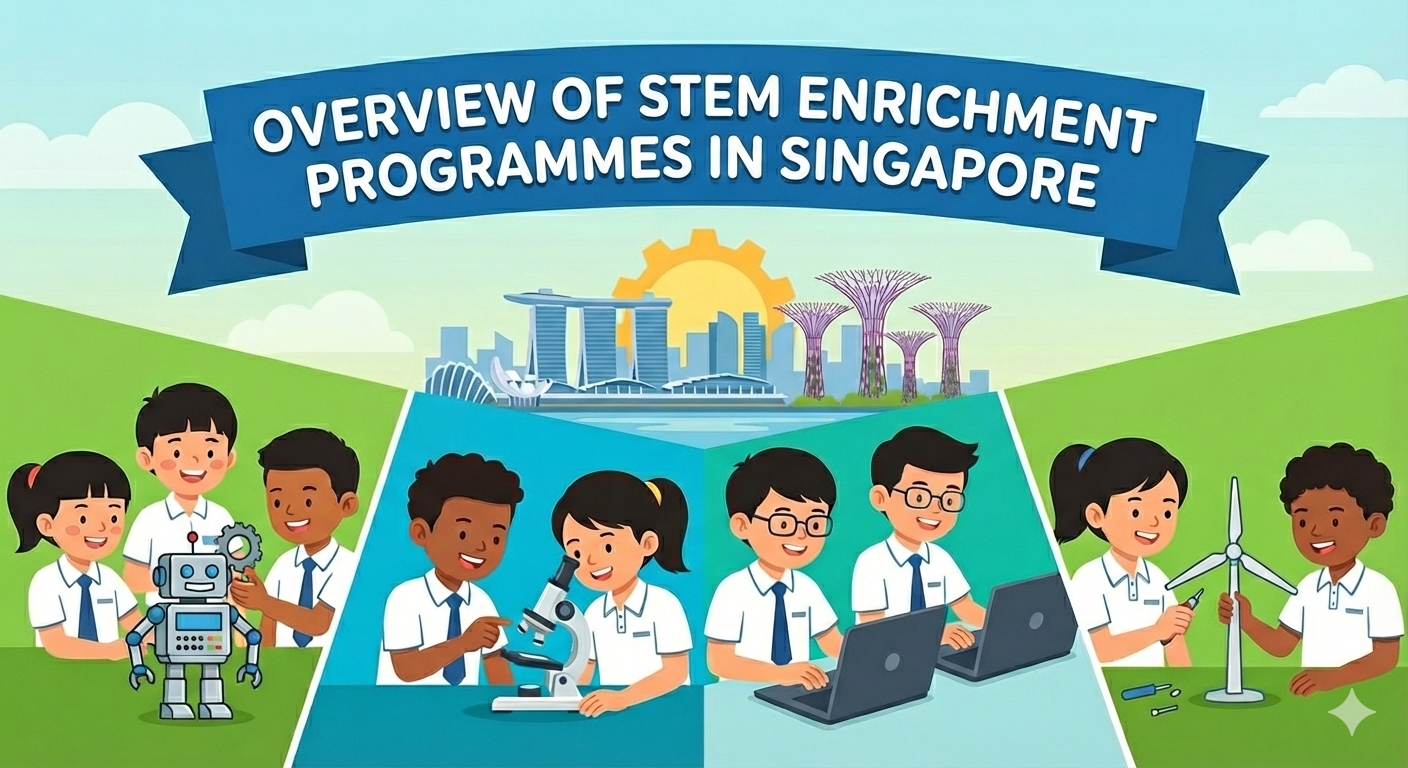
Overview of STEM Enrichment Programmes in Singapore
STEM enrichment programmes in Singapore provide structured learning experiences that extend beyond standard school curricula, focusing on hands-on experimentation and real-world applications. These programmes serve students from preschool through secondary levels, emphasizing skill development in science, technology, engineering, and mathematics through inquiry-based methodologies.
Definition of STEM Enrichment
STEM enrichment programmes are specialized educational offerings designed to supplement mainstream schooling with focused instruction in science, technology, engineering, and mathematics disciplines. These programmes operate through dedicated learning centers, partnerships with institutions like Science Centre Singapore, and structured workshops that prioritize practical application over theoretical learning alone.
The programmes typically incorporate robotics, coding, scientific experimentation, and engineering challenges into their curricula. Students engage with age-appropriate materials and equipment, working on projects that require them to apply STEM concepts to solve tangible problems. Many centers structure their offerings around specific age groups, commonly serving children from 4 to 15 years old, with content tailored to developmental stages.
Benefits of STEM Enrichment Programmes
STEM enrichment programmes develop creative problem-solving skills through challenges that require students to analyze situations, design solutions, and iterate on their approaches. This hands-on learning environment allows participants to experience failure and success in controlled settings, building resilience and analytical thinking capabilities.
Students gain exposure to potential career paths in technology, engineering, and scientific fields through these programmes. The interactive nature of STEM enrichment helps children discover genuine interests in specific disciplines, whether robotics, environmental science, or software development.
The programmes also strengthen foundational skills that transfer to academic performance. Students develop spatial reasoning, logical thinking, and collaborative abilities through group projects and structured activities. These competencies support learning across subjects, not just STEM-related coursework.
Emerging Trends in STEM Education
Current STEM education trends emphasize integration of multiple disciplines within single projects, moving toward STEAM models that incorporate arts and design thinking. Programmes increasingly focus on sustainability challenges, artificial intelligence concepts, and digital literacy as core components of their curricula.
Technology integration has expanded beyond basic coding to include robotics competitions, 3D printing projects, and virtual reality applications. Many centers now offer hybrid learning formats that combine physical classroom experiences with digital resources and remote collaboration tools.
Industry partnerships are becoming more prevalent, with enrichment centers connecting students to professionals and real-world applications. Some programmes incorporate mentorship opportunities, facility visits, and project-based learning tied to current industry challenges, preparing students for future workforce demands.
How to Choose the Best STEM Enrichment Programme
Selecting the right STEM enrichment programme requires evaluating factors like teaching methodology, instructor qualifications, and alignment with a child’s learning style. Parents should also assess programme accreditation and understand the application requirements to secure placement.
Factors to Consider When Selecting a Programme
Age-appropriate curriculum forms the foundation of effective STEM learning. Programmes should match a child’s developmental stage, with younger children benefiting from hands-on experiments and older students tackling complex coding or engineering projects.
Class size and student-to-instructor ratios directly impact learning outcomes. Smaller groups of 6-10 students allow instructors to provide individual attention and adapt lessons to different learning paces.
Teaching methodology varies across centres. Some programmes emphasise project-based learning where students build working prototypes, whilst others focus on theoretical concepts first. Parents should observe trial classes to see which approach engages their child.
Schedule flexibility matters for busy families. Weekend classes, holiday intensives, and ongoing term programmes each serve different needs. Some centres offer makeup classes for absences.
Cost and commitment length require careful consideration. Programmes range from single-day workshops to year-long courses. Monthly fees typically span $150-$400 depending on session duration and materials provided.
Recognising Quality and Accreditation
Reputable STEM centres display clear credentials and partnerships with recognised educational bodies. Look for programmes affiliated with established institutions like Science Centre Singapore or those endorsed by international educational frameworks.
Instructor qualifications should include relevant degrees in science, technology, engineering, or mathematics fields. Many quality programmes employ educators with teaching certifications or industry experience in STEM sectors.
Curriculum standards aligned with Ministry of Education frameworks ensure coherence with school learning. Some centres incorporate international standards like Next Generation Science Standards or British curriculum elements.
Student outcomes and testimonials provide practical insights into programme effectiveness. Request information about competition achievements, student project portfolios, or progression rates to advanced courses.
Application Process and Admission Tips
Most STEM programmes accept applications on a rolling basis, though popular centres fill slots quickly during peak periods. Early registration 2-3 months before term start secures preferred time slots.
Trial classes help families assess programme fit before committing to full terms. Many centres offer complimentary or discounted first sessions.
Required documentation typically includes student age verification, medical information for safety protocols, and previous learning experience if joining advanced levels. Some competitive programmes conduct placement assessments to match students with appropriate course levels.
Top Coding / AI Enrichment Providers for 2026
Several established providers offer comprehensive coding and AI programmes that prepare students for technology-focused futures. These centres provide structured curricula ranging from introductory programming to advanced artificial intelligence applications for different age groups and skill levels.
1. Alphagen Learning
Alphagen Learning delivers online programming and technology classes designed for students across all age groups and skill levels. The centre structures its curriculum around hands-on projects that connect coding concepts to real-world applications.
Students work through mobile app development, web development, and machine learning modules. The programme includes interactive games that reinforce programming fundamentals while maintaining student engagement. Classes incorporate real-world examples to demonstrate how coding skills apply beyond academic settings.
The online format provides flexibility for families managing multiple commitments. Students can access challenging and rewarding coursework that scales with their developing abilities. The curriculum emphasizes both foundational programming languages and emerging technologies like artificial intelligence.

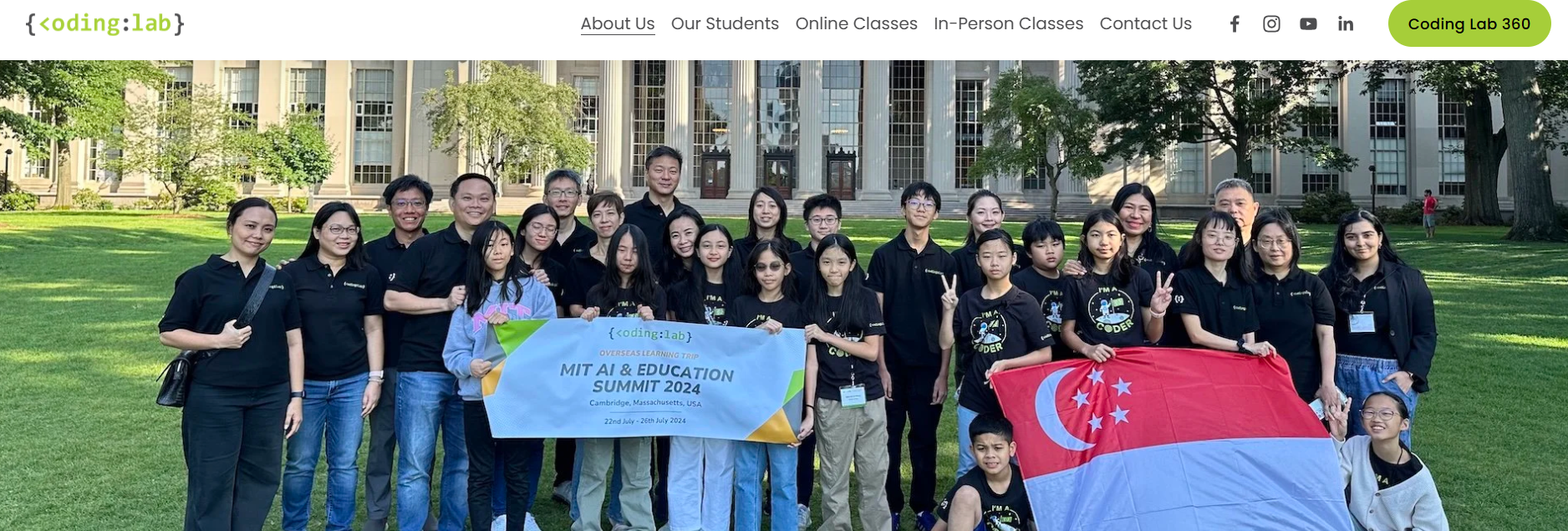
2. Coding Lab
Coding Lab operates from locations at Parkway Parade and KAP Mall with an MIT-inspired curriculum for students aged 7 to 18. The centre’s students have achieved notable results in competitions including the Hwa Chong Infocomm Challenge, National Olympiad in Informatics, and Microsoft Minecraft Japan Cup 2023.
The programme focuses on computational thinking skills and problem-solving through real-world projects. Students create functional applications such as obstacle-sensing robots, cell division simulators, and AI vs. Human Text Recognisers. Course offerings span AI, augmented reality, data analytics, web development, app development, and game development.
Students receive instruction from educators trained at leading global universities. Many participants have successfully gained Direct School Admission (DSA) placement through their coding portfolios. The centre’s structured approach provides a clear learning pathway from foundational concepts to advanced applications.
3. The Lab Singapore
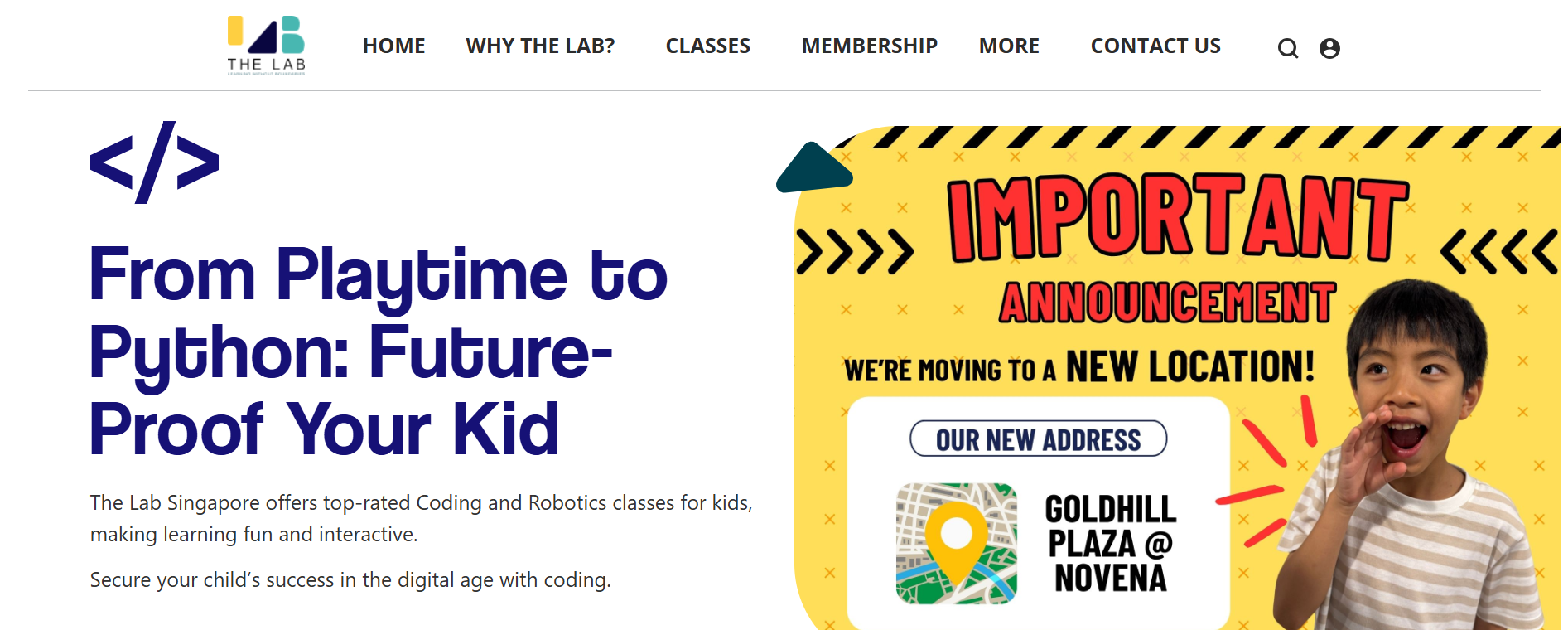
The Lab Singapore maintains locations at Kinex Mall, Centrepoint, and Woods Square, serving students aged 4 and above. The physical spaces function as interactive environments where children explore coding concepts through hands-on experimentation.
The Junior Program introduces coding fundamentals through age-appropriate activities for younger learners. The Lab Coder Program advances through four progressive stages that build computational thinking skills and Python fluency. Students develop technical abilities while learning to cooperate on shared projects.
The centre emphasizes creating an engaging atmosphere that makes technology education accessible to beginners. Students progress at their own pace through structured modules that balance challenge with achievable goals.
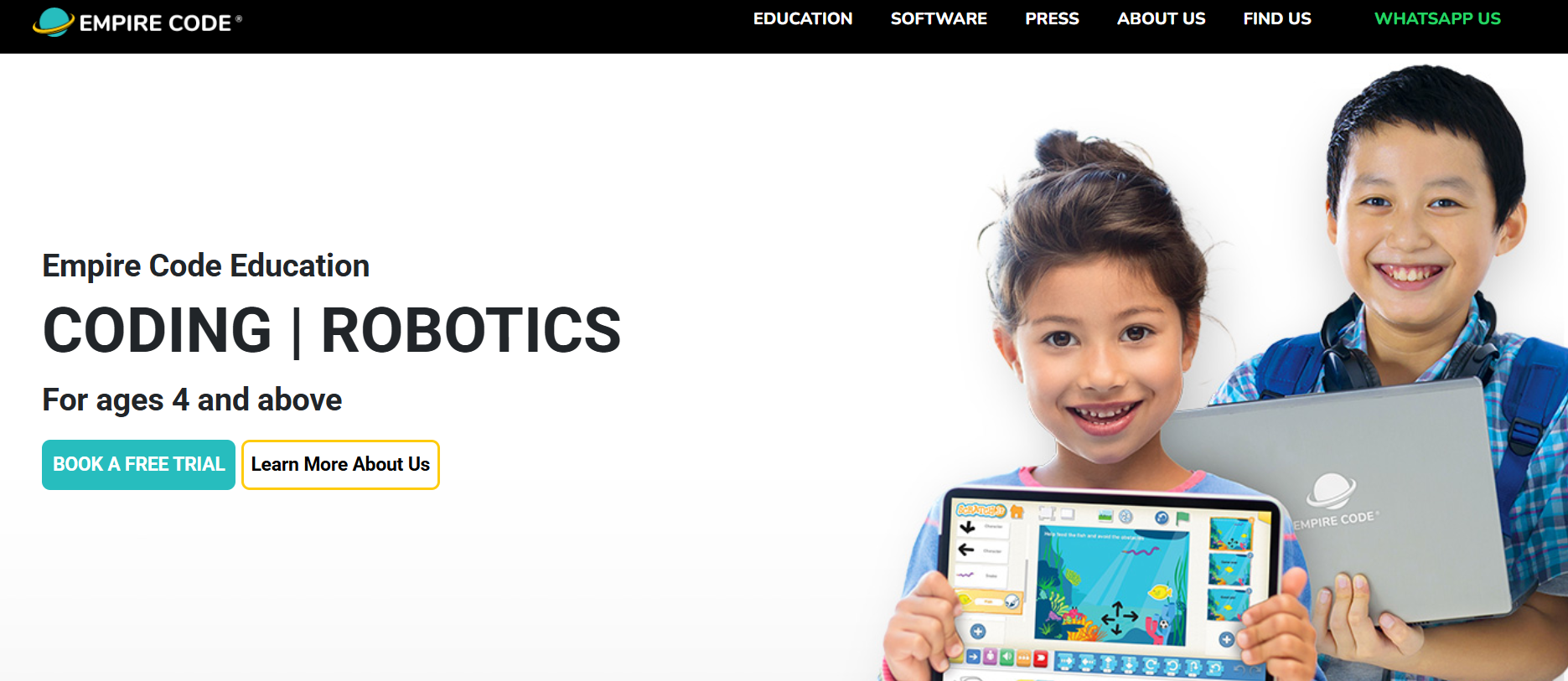
4. Empire Code
Empire Code operates as an MOE-registered school with campuses in Novena and River Valley. The Novena location specializes in Direct School Admission (DSA) preparation through small-group project-based STEM learning, while River Valley serves international school students.
Classes accommodate children aged 4 and above with programmes spanning LEGO robotics, Micro, Python, Minecraft coding, Roblox game design, AI, and 3D design with printing. The centre maintains small class sizes to ensure personalized attention and flexible scheduling options.
Students participate in national and international competitions to gain practical experience. Graduates receive certificates that strengthen DSA portfolios and university applications. The centre’s approach emphasizes hands-on workshops that generate genuine enthusiasm for technology subjects among participants.
Top Robotics and Engineering Providers for 2026
Several established providers in Singapore specialize in robotics and engineering education, offering structured curricula that develop technical skills and problem-solving abilities. These centers cater to various age groups with hands-on learning approaches and industry-standard tools.
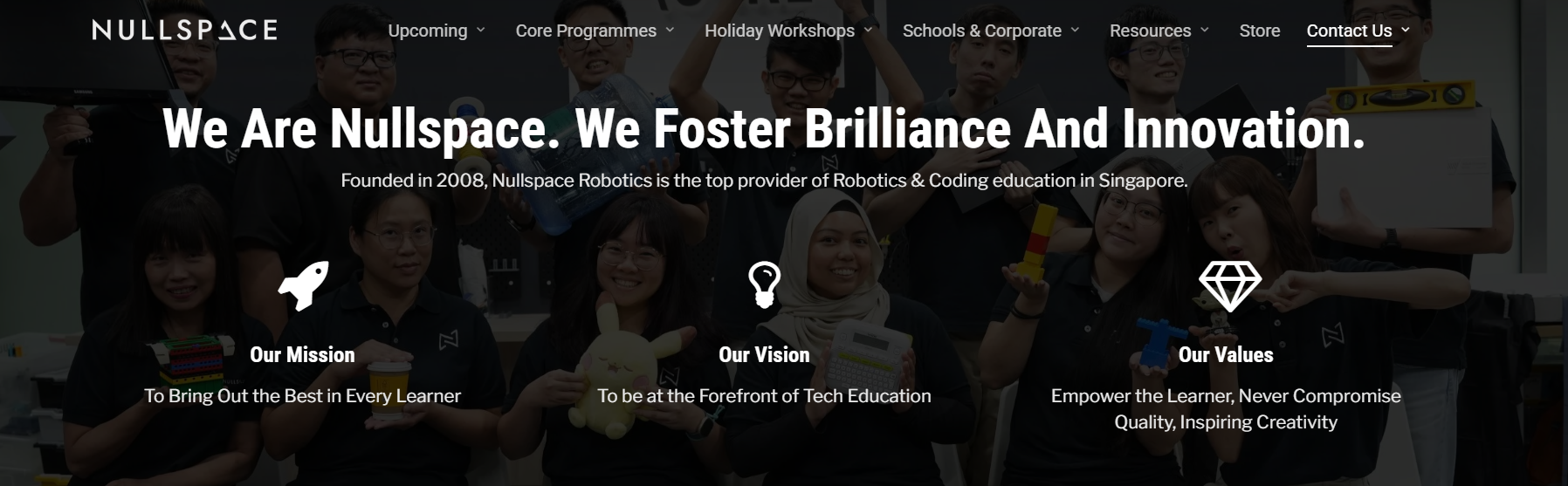
1. Nullspace Robotics
Nullspace Robotics has operated since 2008 as a pioneer in robotics education in Singapore. The center maintains an instructor-to-student ratio of 1:4, which allows for personalized attention during classes.
The organization serves over 3,800 students across its locations. Its curriculum focuses on LEGO robotics enrichment and coding classes, developed and refined in-house over more than a decade. Students work through programs designed to encourage self-discovery through hands-on projects.
Classes are available at multiple venues, including SAFRA Tampines where members receive a 15% discount on ala-carte pricing. The center also offers a parent referral scheme that provides $50 cash rewards for successful referrals, while new families receive $50 off their first course.
Nullspace has received media recognition, including features on CNA Money Mind and participation in government tech initiatives. The center’s long-standing presence in Singapore’s enrichment landscape reflects its established reputation in robotics education.
2. NK Robotics
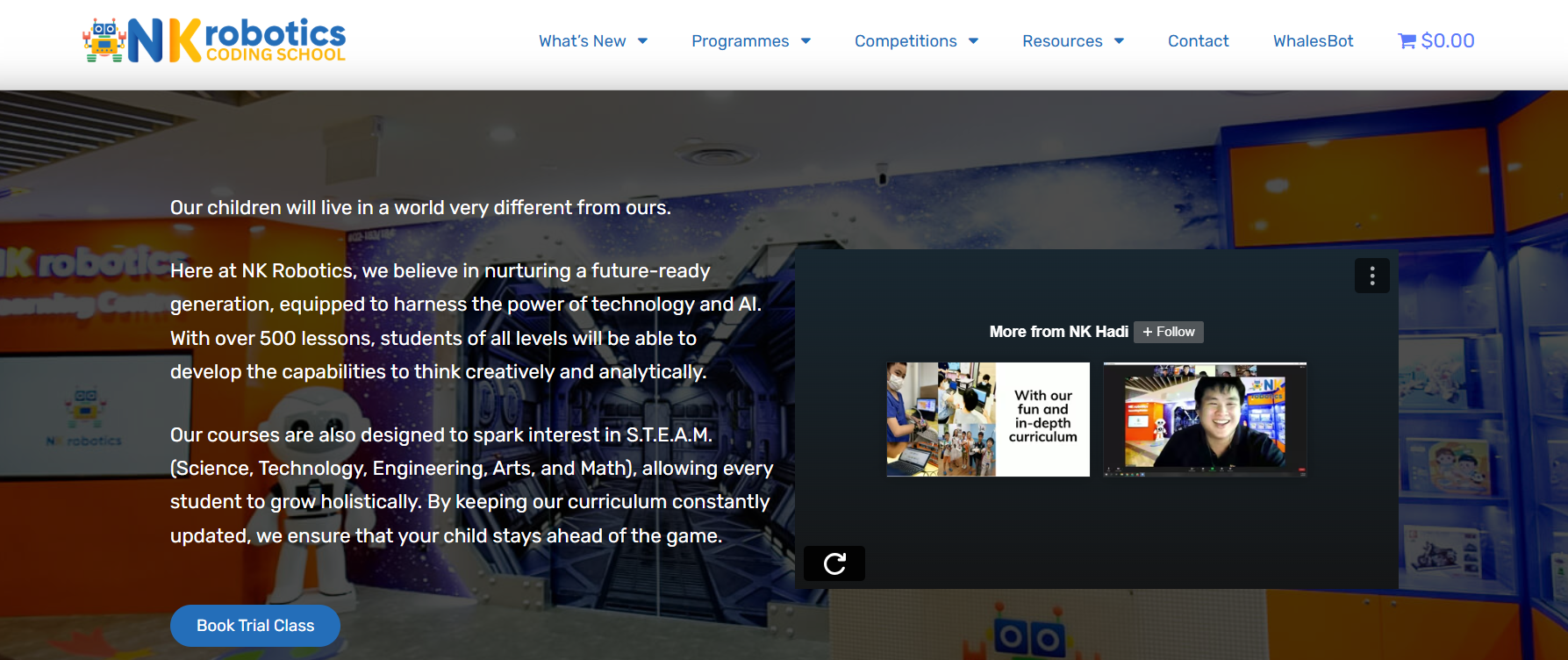
NK Robotics provides structured robotics programs that emphasize practical engineering skills. The center designs courses to build students’ understanding of mechanical systems and programming logic through project-based activities.
Programs at NK Robotics incorporate competition preparation for students interested in robotics challenges. The curriculum includes modules on sensors, motors, and control systems that mirror real-world engineering applications.
Classes are structured to promote independent learning, where students diagnose problems and develop solutions with guidance from instructors. This approach helps develop analytical thinking and technical troubleshooting abilities that extend beyond robotics into general STEM disciplines.
3. Futurum Academy
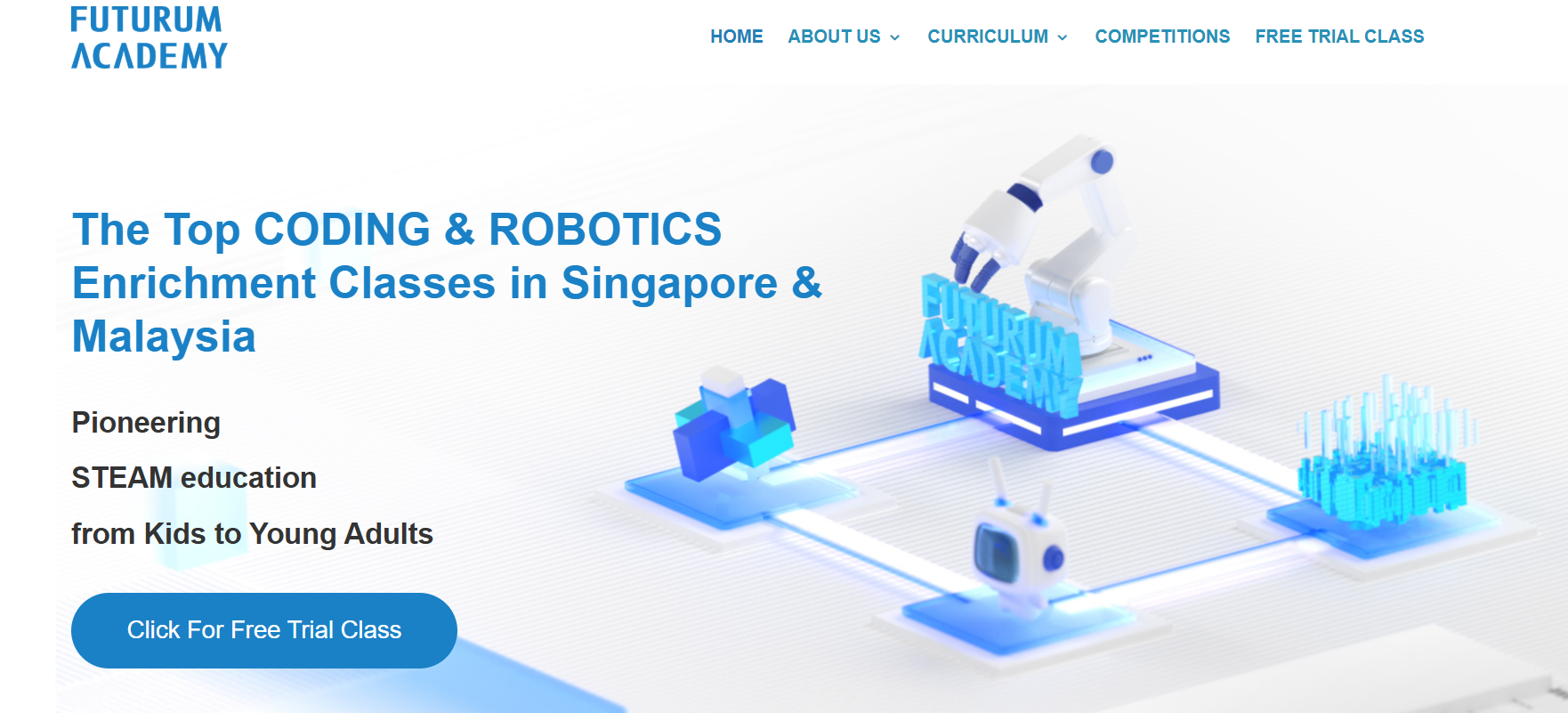
Futurum Academy offers robotics and engineering courses with an integrated programme approach that combines multiple STEM disciplines. The center structures its classes to connect robotics concepts with coding, mathematics, and physics principles.
Students work with various platforms and tools that introduce engineering design processes. The curriculum progresses from foundational concepts to advanced applications, allowing students to build skills systematically.
The academy emphasizes real-world applications in its teaching methodology. Projects often relate to current technology trends and practical engineering challenges, helping students understand how classroom learning translates to industry applications.
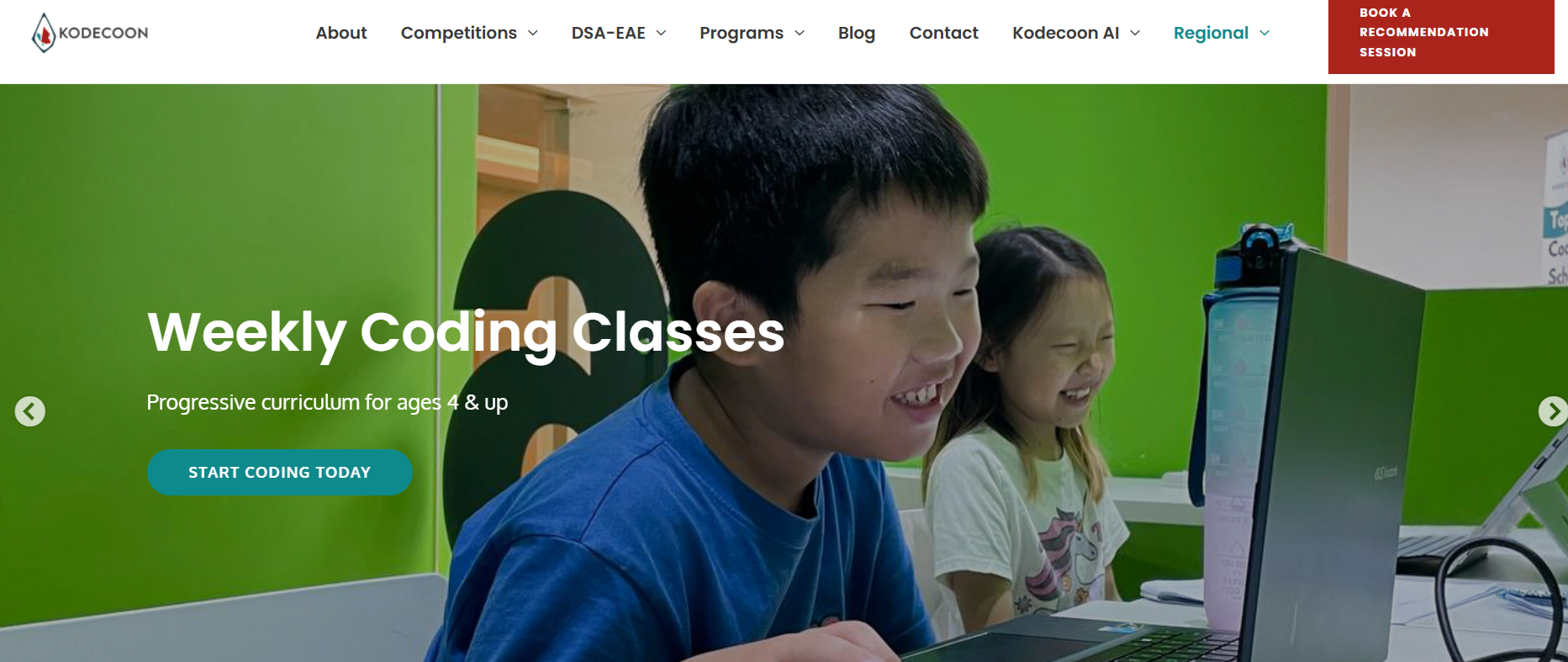
4. Kodecoon
Kodecoon provides robotics education with a focus on software-hardware integration. The center’s programs teach students how programming controls physical systems, bridging the gap between abstract code and tangible results.
Classes incorporate age-appropriate challenges that scale in complexity as students advance. The curriculum includes both visual programming languages for younger learners and text-based coding for older students.
Kodecoon’s teaching methodology encourages independent learning through structured experimentation. Students test hypotheses, observe results, and modify their approaches based on outcomes. This iterative process mirrors professional engineering practices and develops critical thinking skills alongside technical knowledge.
Top Science and Maker Providers for 2026
Science Centre Singapore leads with institutional backing and extensive facilities, while TinkerLab and Kids DiscoveryWorks provide specialized hands-on maker experiences that develop engineering and creative problem-solving skills.
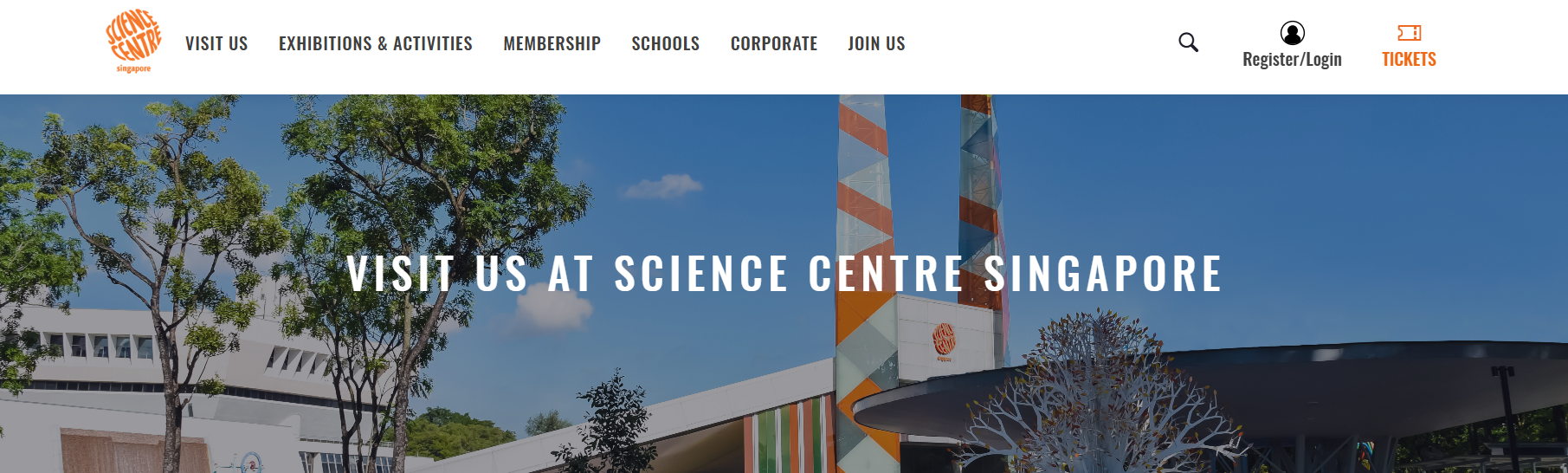
1. Science Centre Singapore
Science Centre Singapore operates as a national institution with dedicated STEM enrichment programmes through its STEM Inc division. The centre offers curriculum-aligned workshops, holiday camps, and long-term courses that cover physics, chemistry, biology, and engineering concepts through interactive exhibits and laboratory sessions.
STEM Inc launched in January 2014 and works directly with the Ministry of Education to support Applied Learning Programmes in secondary schools. The centre provides access to specialized equipment and facilities not typically available in standard educational settings. Students engage with industry-standard tools and participate in experiments that demonstrate real-world applications of scientific principles.
The programme structure includes age-appropriate pathways from primary through secondary levels. Workshop topics range from robotics and coding to environmental science and space technology. The centre’s reputation score of 99.7 reflects its established position as a trusted educational provider in Singapore’s STEM landscape.
2. TinkerLab
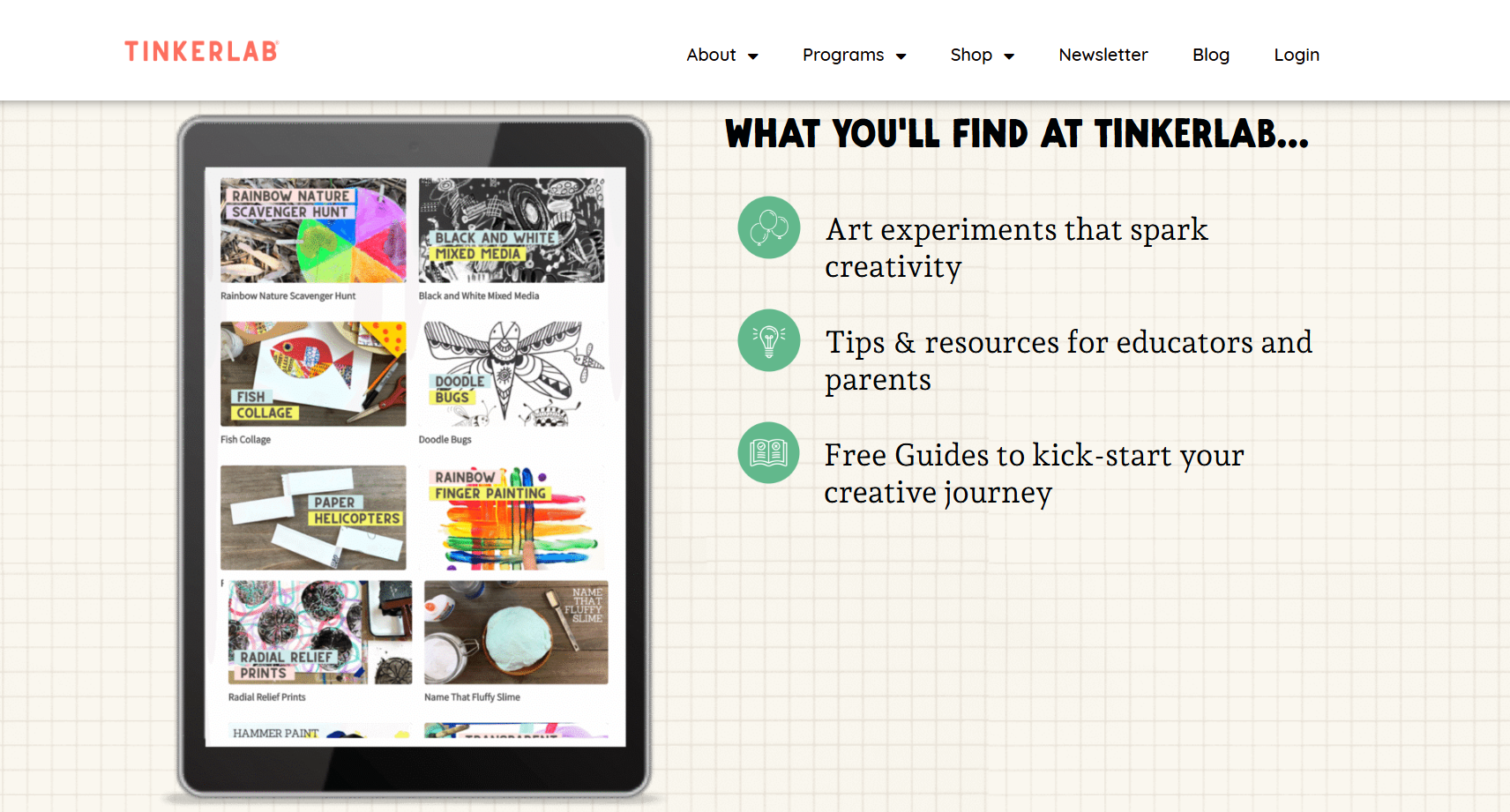
TinkerLab focuses on maker education through project-based learning that emphasizes design thinking and prototyping. The centre provides students with materials, tools, and guidance to build functional creations while learning engineering fundamentals and problem-solving methodologies.
Classes incorporate electronics, mechanical systems, and basic coding to create interactive projects. Students work through the complete design cycle from ideation to testing and iteration. The hands-on approach develops spatial reasoning, technical skills, and confidence in working with physical materials and components.
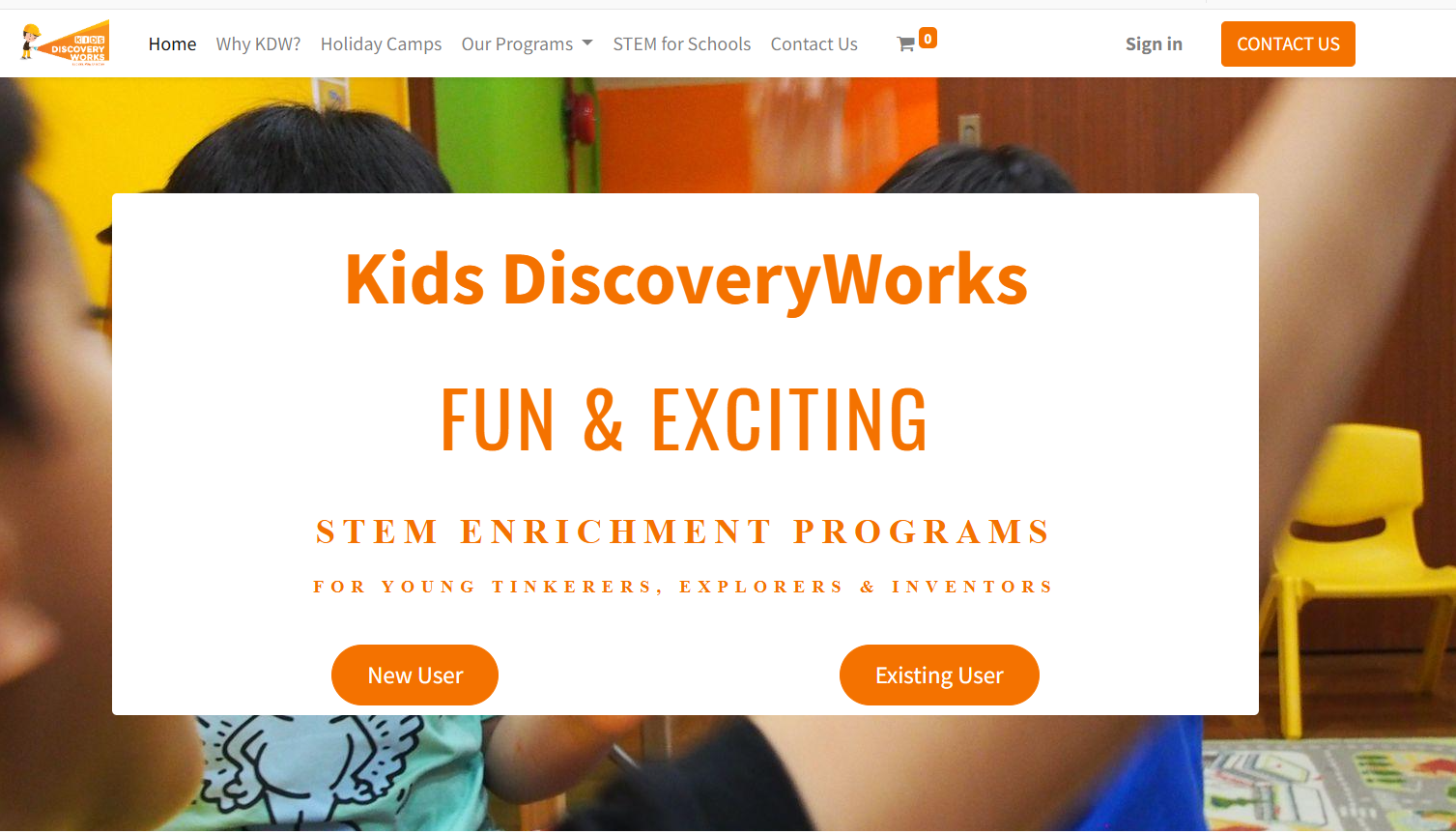
3. Kids DiscoveryWorks
Kids DiscoveryWorks delivers science enrichment through inquiry-based learning focused on experimental methods. The centre structures lessons around hands-on experiments that allow students to observe phenomena, form hypotheses, and draw conclusions based on evidence.
Programme offerings cover core science disciplines with emphasis on practical application rather than rote memorization. Students conduct experiments in small groups, learning laboratory techniques and scientific documentation methods. The centre adapts content to align with school curricula while extending beyond standard classroom coverage to deepen understanding of scientific concepts.