
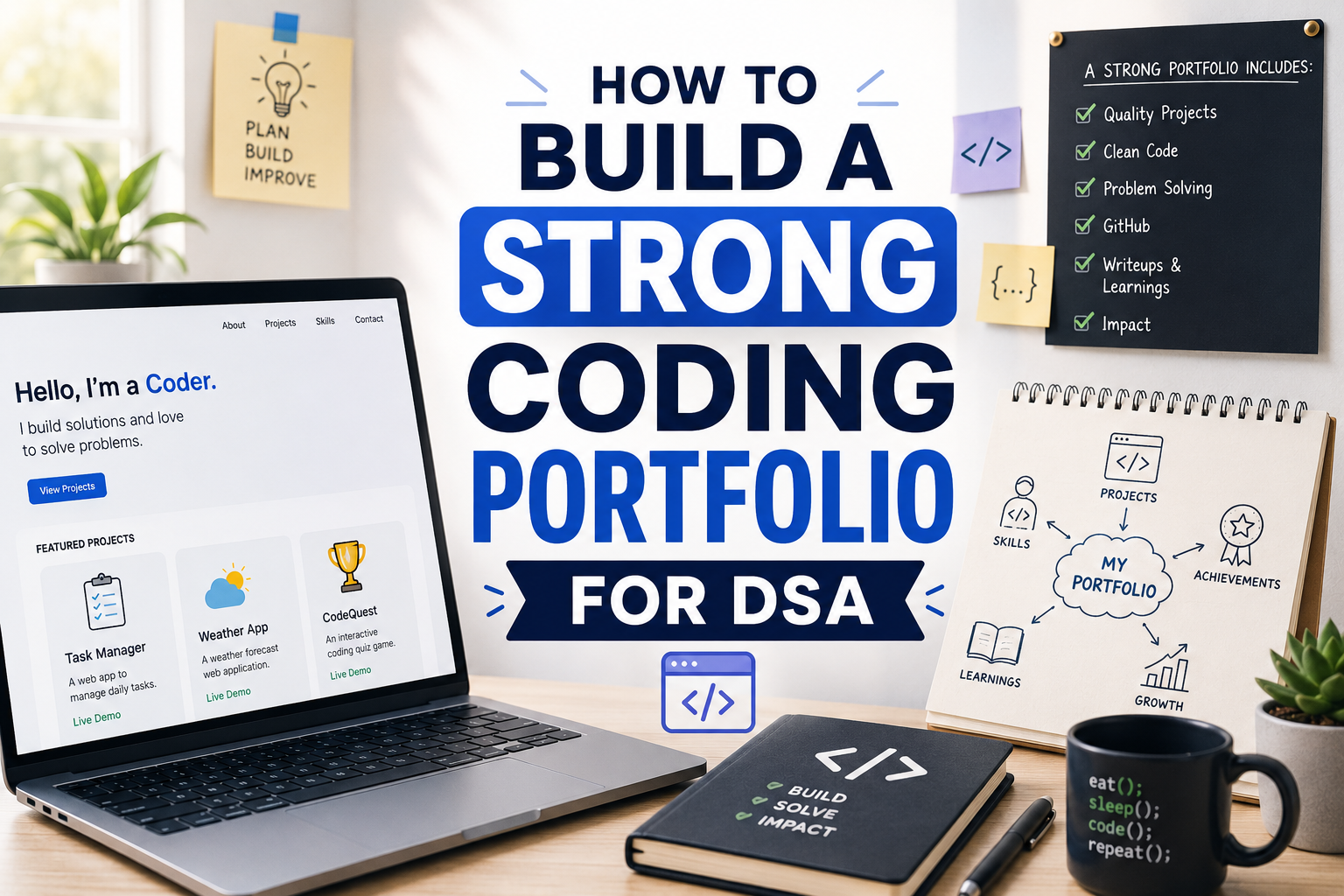
Regardless of which school your child is targeting, the principles of a strong DSA coding portfolio are consistent. Here’s a practical framework:
Start early (Primary 4 is ideal)
Most successful DSA applicants begin preparing one to two years before their P6 application. This gives enough time to build genuine skills, complete meaningful projects, and participate in at least one or two competitions. Starting in P4 allows your child to learn fundamentals, while P5 is for deepening skills and building portfolio-worthy projects.
Focus on depth over breadth
Schools consistently say they value sustained commitment over a long list of surface-level activities. Three well-executed projects with clear problem-solving intent will always outshine ten half-finished ones. Choose projects that demonstrate progression — moving from block-based coding to text-based languages, or from simple games to apps that solve real problems.
Document the process, not just the outcome
Strong portfolios include brief write-ups for each project: what problem it addresses, what tools and languages were used, what challenges came up, and what the child learned. Schools want to see thinking, not just output. Screenshots of code, design sketches, and iteration history all add depth.
Participate in competitions strategically
Not every competition carries equal weight. HCIC is particularly valuable for applicants targeting Hwa Chong. The National Olympiad in Informatics (NOI) carries weight for NUS High. Scratch Olympiad, FIRST LEGO League, and MIT App Inventor Hackathons are broadly recognised. Choose one or two that align with your child’s target school and invest time in proper preparation.
Prepare for the interview
Almost every DSA selection process includes an interview or group activity component. Your child should be able to explain any project in their portfolio in simple, clear terms: what they built, why they built it, how they solved problems along the way, and what they would do differently. Practise mock interviews at home, ask your child to “present” their favourite project to the family.
Suggested Preparation Timeline
Primary 4: Begin structured coding classes. Learn Scratch or block-based coding fundamentals. Explore interests — does your child gravitate more toward game design, apps, robotics, or data?
Primary 5 (first half): Transition to Python or another text-based language. Start building portfolio-worthy projects. Register for first competition (e.g., HCIC, Scratch Olympiad). Attend school Open Houses with your child.
Primary 5 (second half): Refine projects and begin writing brief descriptions for the portfolio. Research target schools and their specific DSA talent areas. Ensure P5 academic results are solid — schools still consider academic performance.
Primary 6 (January to April): Finalise portfolio with two to four strong projects and competition results. Prepare personal statement. Practise mock interviews. Register for HCIC (March registration, May competition).
Primary 6 (May to June): Submit DSA application via MOE Portal (up to three school-talent area combinations). Attend any required assessments or selection tests.
Primary 6 (July to September): Attend interviews and selection activities for shortlisted schools. Receive outcomes by early September.
Primary 6 (October to November): Rank school preferences if holding multiple offers. Sit for PSLE. Await final allocation.
Frequently Asked Questions
Does my child need to win competitions to get a DSA offer?
No. While competition awards strengthen an application, schools also value authentic projects, sustained commitment, and a clear passion for technology. A student who has built meaningful coding projects independently and can articulate their learning journey will be competitive even without competition medals.
Can my child apply to multiple schools using the same portfolio?
Yes. The MOE DSA-Sec Portal allows applications to up to three school-talent area combinations. However, it’s worth tailoring aspects of the portfolio, particularly the personal statement, to align with each school’s specific programme and values.
My child only knows Scratch. Is that enough for DSA?
It depends on the school and talent area. For schools targeting younger or block-based coders, strong Scratch projects can be sufficient. However, for schools like HCI (Infocomm) or NUS High, Python proficiency is strongly recommended. If your child is in P4 or early P5, there’s plenty of time to add Python to their skill set.
What if my child doesn’t get a DSA offer?
If your child does not receive or accept a DSA offer, they will participate in the regular S1 Posting Exercise based on their PSLE results. DSA is an additional pathway, not the only one. Many students thrive in secondary schools they enter through standard posting.
Is DSA worth the stress and preparation?
DSA is a valuable option for students who have a genuine passion and talent in a specific area. It reduces the pressure of relying solely on PSLE scores and lets your child enter a school that actively nurtures their interest. The key word is “genuine” – DSA works best when the child is intrinsically motivated, not when it’s driven solely by parental ambition.
How much does preparation cost?
Costs vary widely. The DSA application itself is free. Preparation costs depend on whether your child attends structured coding classes, competition training programmes, and how long they have been learning. A child who has been attending regular coding classes since P3 or P4 will naturally accumulate portfolio material as part of their normal learning journey.
Final Thoughts
DSA through coding is one of the most exciting and empowering pathways available to Singapore students today. It rewards genuine curiosity, sustained effort, and creative problem-solving – skills that will serve your child far beyond the secondary school application process.
The most important thing you can do as a parent is to start early, support your child’s genuine interests, and let the portfolio grow organically from real learning. The best DSA portfolios are never assembled in a panic the month before applications open. They’re the natural result of a child who has been building, experimenting, and falling in love with technology over time.
At Alphagen Learning, our structured coding programmes for ages 7 to 16 are designed to give students the skills, projects, and confidence they need – whether they’re preparing for DSA or simply discovering a lifelong passion for technology. Book a free trial class to see how we can support your child’s coding journey.