
The 2026 Gen Alpha Dictionary: 15 Must-Knows For Parents
You hear new tech words from your kid and realise they mean something specific, not random noise. Gen Alpha, born from 2010 through 2025, uses tech-driven language shaped by apps, games, and social platforms they use every day.
That language moves fast and often skips clear explanations. You need to understand a small set of core tech terms to follow how Gen Alpha communicates, learns, and socializes in 2026.
These words explain how they share content, react online, manage attention, and signal identity. Knowing them helps you understand intent, not just vocabulary.
This dictionary focuses on 15 essential tech terms you are most likely to hear at home, in school chats, or during screen time. Each term reflects how technology shapes daily communication and self-expression.
Key Takeaways
- Gen Alpha tech language reflects daily digital habits and platforms.
- A short list of core terms explains most online conversations.
- Understanding these terms improves communication and context at home.
Understanding Gen Alpha and Their Slang
Gen Alpha slang reflects how kids communicate inside digital spaces and bring that language into everyday IRL conversations. You see these terms shaped by meme culture, TikTok trends, gaming platforms, and constant online interaction.
Why Gen Alpha Slang Matters for Parents
You hear Gen Alpha slang terms daily, whether during homework, gaming, or casual conversation. These Gen Alpha words and phrases often signal mood, social status, or online experiences rather than just humor.
Understanding common Gen Alpha terms helps you spot context quickly. For example, “NPC” usually means someone seems passive or scripted, while “aura” refers to social perception.
Gen Alpha slang also changes how kids express stress or confidence. Words like “cooked,” “mid,” or “valid” communicate emotional states in shorthand.
Familiarity supports better conversations without forcing you to use the slang yourself. You gain clarity and stay grounded in how your child experiences their digital and IRL worlds.
Core Gen Alpha Tech Terms: The Essential 15
You see these terms most often in apps, games, group chats, and comment sections. They shape how kids signal humor, status, agreement, and conflict in digital spaces.
Defining Each Key Term
These terms function as shortcuts inside platforms like TikTok, YouTube, Roblox, and messaging apps. You will see them typed, spoken, or turned into reaction memes.
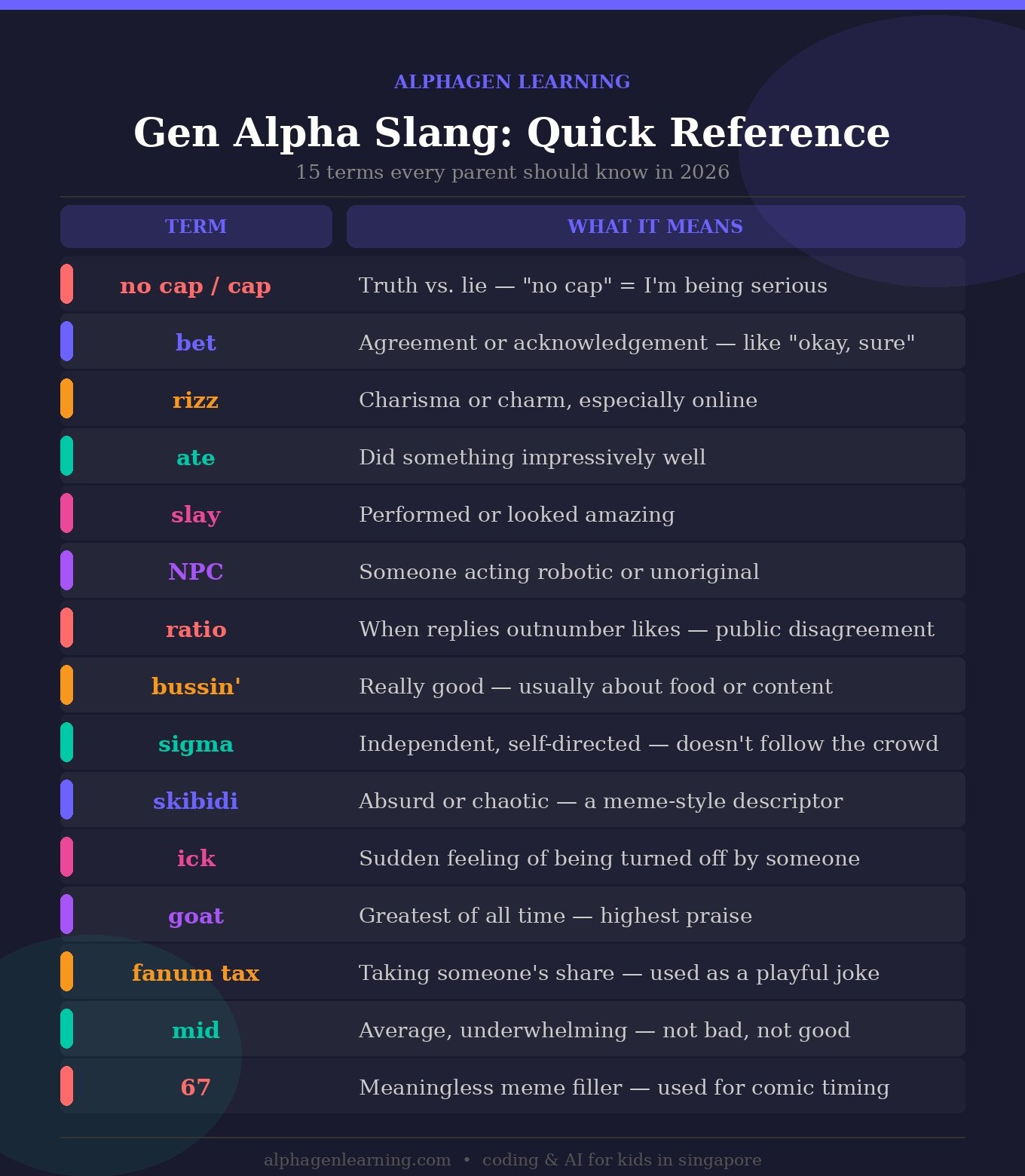
Context matters more than literal meaning. Kids use these terms to manage tone and belonging online.
Real-World Examples for Parents
You might hear “no cap” after a claim about school or a game update. It signals honesty, not attitude.
When a video comment says “ratio,” the writer expects the crowd to push back. Engagement becomes the argument.
If your child says a creator “ate” or is the “goat,” they praise performance. Calling someone an og credits early participation.
“Fanum tax” shows up during shared snacks or digital trades. It frames taking a portion as playful.
“Rizz” appears in texting and gaming chats. It refers to confidence.
When something feels awkward online, kids say it gave them the ick. “Mood” often follows a relatable post to signal agreement.
67
“67” (also written 6-7) does not carry a fixed definition. You will see it used in chats, captions, and comments with no clear reference.
Kids deploy it the way earlier generations used random sound effects or filler words. The value sits in timing, not meaning.
You might see “67” dropped after a joke, during a pause in a game lobby, or as a reply to something confusing. It signals playful absurdity.
Treat it as a tone marker rather than a message. If you ask what it means, many kids will tell you it means nothing.
Trending and Viral Terms in Gen Alpha Culture
Gen Alpha slang spreads through short-form video, gaming platforms, and livestream chats. You hear many of these terms in daily conversation, often detached from their original context but still tied to digital culture and social signaling.
Meme-Driven Phrases
Meme-driven phrases often sound random, but they carry shared meaning shaped by repetition and humor. Skibidi describes chaotic or absurd behavior, usually without a literal definition.
Kids use it to label something intentionally silly or offbeat. Other terms focus on identity and behavior.
Sigma refers to someone who acts independent and avoids group approval. NPC does the opposite; it labels someone as predictable or lacking originality.
You may also hear phrases tied to self-image. Main character and main character energy frame everyday moments as if they matter more, often in a playful or ironic way.
| Term | Common Use |
|---|---|
| skibidi | absurd, meme-style behaviour |
| sigma | independent, self-directed |
| npc | unoriginal, scripted |
Icons from Gaming and Social Media
Gaming and livestream culture shape how Gen Alpha talks about attention and reactions. Chat refers to the live comment stream on platforms like Twitch or YouTube, but kids also use it offline to address a group, as in “chat, look at this.”
Social evaluation terms move easily between screens and real life. A vibe check tests whether someone fits the mood of a group or moment.
Status language also borrows from gaming logic. Infinite money glitch describes a shortcut or unfair advantage, often used jokingly.
When something works especially well, kids call it fire, meaning high quality or impressive.
Terms Born on TikTok
TikTok drives slang that centers on perspective, visibility, and social outcomes. POV introduces a scenario from a specific viewpoint, even outside video.
Kids use it to frame jokes or stories with assumed context. Social consequences also get shorthand.
Ghosted means someone suddenly stopped responding, with no explanation. The word carries emotional weight but stays matter-of-fact.
TikTok language often blends humor with self-awareness. Phrases like main character energy thrive here, reinforcing the idea that everyday actions deserve attention.
When something lands well with peers, kids call it fire, even if it started as a video trend.
Everyday Phrases: Communication and Self-Expression
Gen Alpha uses short, flexible phrases to react quickly, signal identity, and give feedback in everyday conversation. These expressions often replace longer explanations and show how someone feels, where they fit socially, or how strongly they approve.
Feelings and Reactions
You will hear many phrases that act as instant mood indicators. Words like cringe, shook, and salty describe emotional reactions without extra context.
If something feels embarrassing, it is cringe; if it causes surprise, you might feel shook; if it irritates you, you feel salty.
Short expressions also soften or frame honesty. ngl signals that you plan to speak plainly.
sheesh shows disbelief or mild amazement, while gyatt expresses strong surprise or admiration.
Some reactions focus on sensory impact. When music slaps or food is bussin, it delivers immediate satisfaction.
Identity and Relatability
Many everyday phrases help you see how Gen Alpha signals belonging and self-image. Calling something real or valid shows agreement and emotional support.
These words matter in peer conversations because they confirm that someone feels understood. Visual and personal identity often comes up through appearance-based language.
A glow up describes noticeable improvement over time. drip refers to clothing and style, while aesthetic describes a consistent visual vibe across outfits, rooms, or social posts.
You may also hear extra when someone overreacts or does too much. vibes works as a broad label for atmosphere or personality.
Recognition and Praise
Praise in Gen Alpha language sounds casual but carries weight.
Saying someone slay or that they are eating means they performed impressively.
These phrases often apply to looks, confidence, or success in social settings.
Approval also shows up through style and status language.
flex means showing off intentionally.
When used positively, it signals confidence rather than arrogance.
Quick feedback keeps conversations moving.
You might hear a short list like this in daily talk:
| Term | Meaning |
|---|---|
| bussin | very good or enjoyable |
| slaps | hits hard; impresses |
| valid | acceptable or supported |